
About This Coffee
Peaberry happens when a coffee cherry grows one small, round bean instead of the usual two flat-sided ones. Only a small part of any harvest turns out this way, so a lot that has been separated out and is traceable to one growing community is uncommon in Indian green coffee.
The variety is Chandragiri, an Arabica developed in India. The same trees produce the regular flat beans, and this lot is the peaberry sorted out from that harvest. The peaberries go through the same careful pulping and washing as the rest.
What you get is a dense bean of very even size. That evenness helps in the roaster, because the beans move and take heat in a similar way. The trade-off is that peaberries are dense and round, so they can resist heat early in the roast. A gentler start pays off.
Where Does It Come From
- Country: India
- Region: The Nilgiris (Blue Mountains), Tamil Nadu
- Estate: Smallholder growers, Nilgiri Biosphere Reserve
- Altitude: 1,400 MASL
- Variety: Arabica (Chandragiri)
- Grade: Peaberry
- Lot Type: Community Lot, Limited Allocation
- Process: Washed
- Drying: Patio
- Farming: Agroforestry, intercropped under semi-evergreen forest
- SCA Score: 85 Points
The Nilgiris sit where Tamil Nadu, Kerala and Karnataka meet, inside the Nilgiri Biosphere Reserve. It is one of the most biologically diverse landscapes in India. Evergreen forest and high-altitude shola grassland grow side by side, and at 1,400 metres the cooler temperatures slow down how fast the cherries ripen. A slower ripening gives the bean time to build density and sugar.
The growers come from the Irula and Kurumba communities, who have farmed in these hills for generations. Coffee is not grown here as a monoculture. It shares the land with jackfruit, orange, lime, banana, native forest trees, pepper vines and spices. The farms work as part of the forest around them rather than replacing it.
That mixed planting matters beyond the cup. Keeping the canopy in place protects soil and water in the reserve, and it gives the growers several crops instead of depending on one.
Flavour Potential
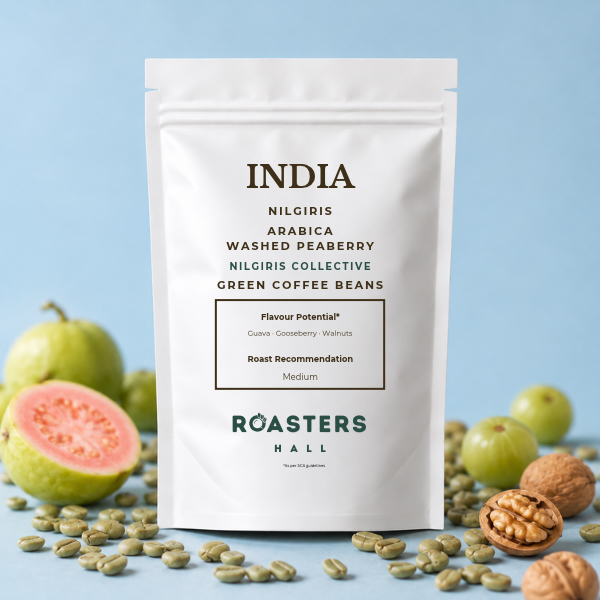
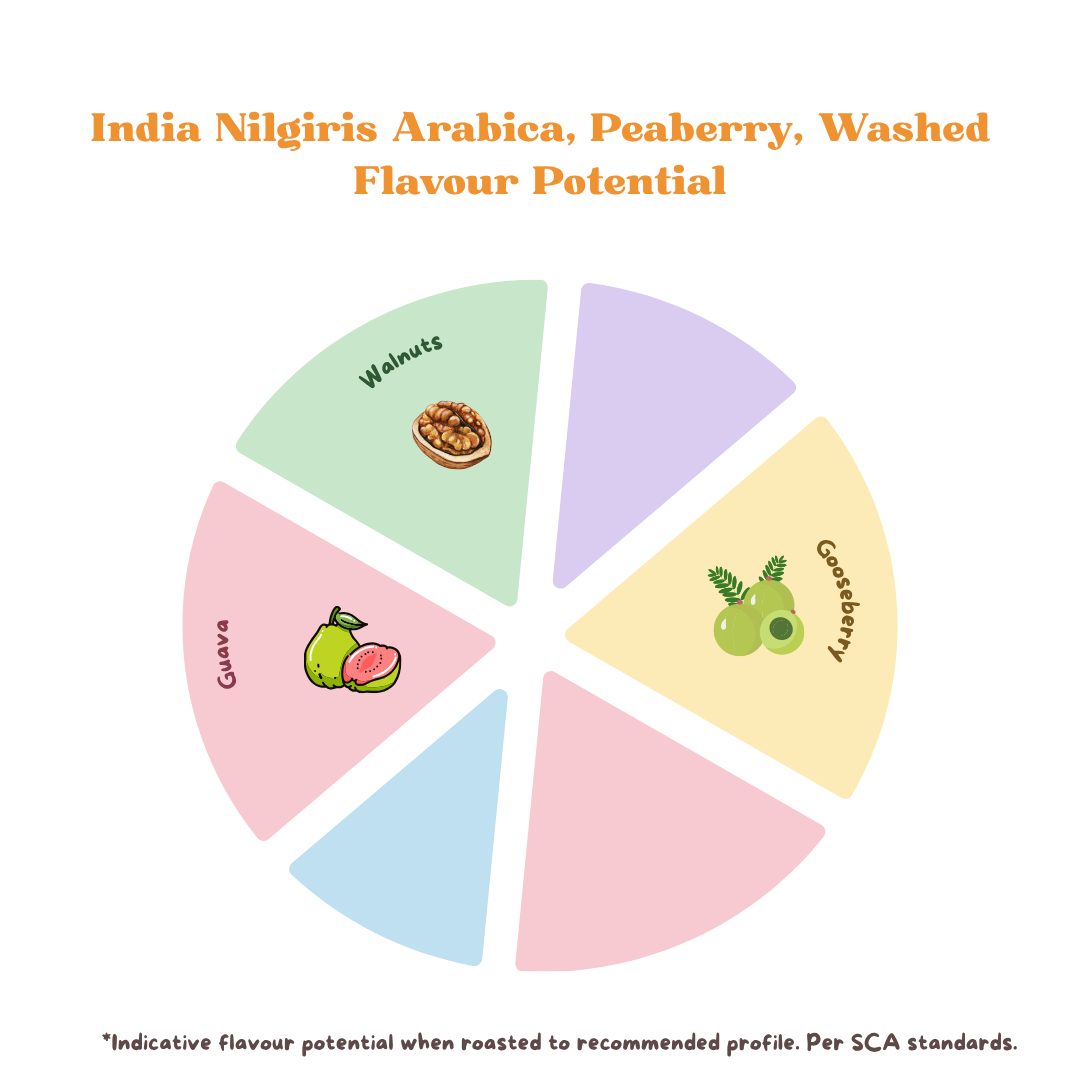
This lot is at its most expressive at a medium roast, where the fruit stays bright and the finish stays grounded.
- 🍐 Guava: tropical, gently sweet, and the first thing you notice in the cup
- 🍏 Indian gooseberry (amla): a tart, lively brightness that lifts the fruit
- 🌰 Walnut: a soft, nutty finish that rounds the cup out
- Body: smooth and clean, from the washed process
- Overall: balanced and layered, each note reads clearly
The washed process strips the fruit away before drying. That’s why the flavours read as clear and separate here, rather than as the heavy, jammy sweetness of a natural. The result is clarity rather than intensity, so this coffee rewards careful roasting and brewing.
What Is Washed Processing?
Washed processing, also called wet processing, removes the fruit from the coffee seed before it dries.
- Pulping: ripe cherries go through a pulper, which strips off the skin and most of the fruit. With peaberries this step has to be done carefully so the small round beans aren’t damaged.
- Fermentation: the beans, still coated in a sticky layer called mucilage, rest in water or tanks while natural fermentation breaks that layer down.
- Washing: clean water rinses the loosened mucilage away.
- Drying: the clean beans are dried down to a stable moisture level before milling.
Because the fruit comes off early, the flavour of a washed coffee comes mainly from the bean itself: variety, altitude and growing conditions. Washed coffees tend to taste cleaner and brighter, with more defined acidity. That is why this process suits a lot like this one, where the point is to taste what the Nilgiris actually give the coffee.
Roast Recommendation
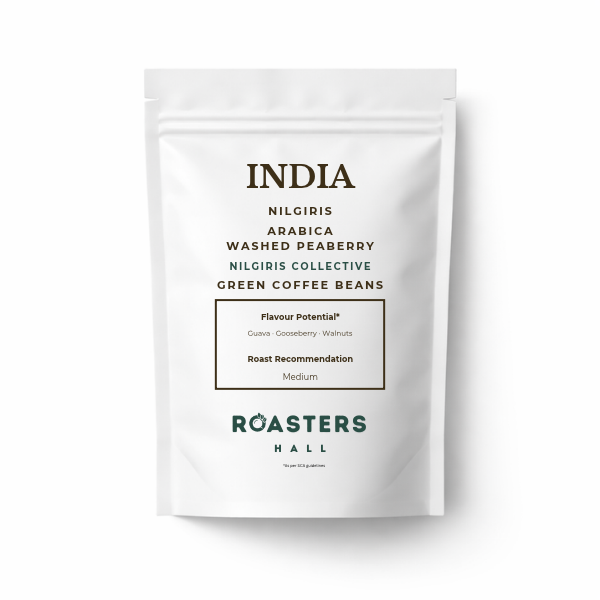
Recommended roast range: Medium
Peaberries behave a little differently in the roaster. They’re small, dense and round, so they roll evenly in the drum. They also take heat into the centre more slowly.
These are starting points for a typical home drum roaster. Adjust them for your machine and batch size.
- Charge: start a little gentler than you would for a flat-bean washed Arabica, so the heat can reach the centre before the outside starts to brown
- First crack: expect it at about 196 to 200°C bean temperature
- Drop temperature: about 210 to 218°C for a medium roast
- Development time: aim for 15 to 20 percent of total roast time after first crack
- Maillard phase: watch this stage closely. Steady heat here lets the centre develop without scorching the surface
Tips:
- Taking it darker than medium fades the guava and gooseberry and flattens the layering that makes this lot interesting
- Stopping too light can leave the dense centre underdeveloped, which tastes grassy or sour
- Rest the roasted beans for 24 to 48 hours before brewing, so the flavour can settle
Brewing Suggestion
This coffee works across several methods, as long as you keep the roast at medium.
- ☕ Pour over: shows the guava and gooseberry most clearly. Try 1:16 with a medium grind.
- ☕ AeroPress: balances brightness and body. A short steep with a medium-fine grind works well.
- ☕ Moka pot: try 1:8 with finely ground coffee, warm water to start, and medium heat. It brings out the fruit and walnut together.
- ☕ Indian filter: a traditional way to brew it, and the walnut finish holds up well with milk.
Brewing tips:
- Use water just off the boil, 90 to 96°C
- If the cup tastes sour, grind finer. If it tastes bitter, grind coarser.
Is This Coffee Right For Me
Yes, if:
- You like bright, fruit-forward coffee with a clean finish
- You want to try a peaberry, or Indian Arabica beyond the usual chocolate profile
- You enjoy roasting carefully to bring out layered flavour
Consider instead:
- India Coorg Peridinia Robusta Red Honey, Riverside Estate, for more body and stone fruit sweetness
- Colombia Huila Washed, for a balanced everyday cup
- Ethiopia Yirgacheffe Grade 1 Natural, for intense floral and fruit notes
How To Store
Keep green coffee in a cool, dry place out of direct sunlight, ideally in a breathable bag or one with a one-way valve. Don’t refrigerate or freeze it, because both cause moisture problems. Stored well, green coffee stays roastable for up to twelve months.
Why Buy From Roasters Hall
We stock coffees with clear, traceable origins, and we give you the details you need to roast them well.
- Traceable to region and growing community
- Real specifications, not vague descriptions
- Roast and brewing guidance written for home roasters
- Shipped across Canada
Frequently Asked Questions
1. What is a peaberry coffee bean?
A peaberry forms when a coffee cherry grows one small, round bean instead of the usual two flat-sided beans. It happens naturally in only a small part of any harvest, and these beans are sorted out to create a separate lot. Peaberries are dense and very even in size, which affects how they roast.
2. What does India Nilgiris Arabica Peaberry Washed taste like?
At a medium roast, expect bright guava and Indian gooseberry up front, a smooth and clean body from the washed process, and a gentle walnut finish. It is fruit-forward and layered, and quite different from the chocolate and spice profiles common in many Indian coffees.
3. What roast level suits this coffee best?
Medium. It keeps the guava and gooseberry bright and lets the walnut finish develop. Roasting darker fades the fruit, and stopping too light can leave the dense peaberry centre underdeveloped.
4. Do peaberries roast differently from regular beans?
Yes. Their round shape helps them tumble evenly, but their density means heat reaches the centre more slowly. A slightly gentler start and close attention during the Maillard phase help the bean develop all the way through without scorching the surface.
5. Where in India is this coffee grown?
In the Nilgiris, the Blue Mountains of Tamil Nadu, inside the Nilgiri Biosphere Reserve. It grows at 1,400 metres, where semi-evergreen forest and shola grassland meet, and is farmed by smallholders from the Irula and Kurumba communities.
6. Is this coffee shade grown?
Yes. It grows in an agroforestry system, intercropped with jackfruit, orange, lime, banana, native forest trees, pepper vines and spices. The coffee grows as part of the forest landscape rather than as a cleared monoculture.
7. What is the best way to brew this coffee?
Pour over shows the fruit most clearly, and AeroPress gives a balance of brightness and body. A moka pot brings the fruit and walnut together, and an Indian filter suits it well with milk. Keep the roast at medium for all of them.


Reviews
There are no reviews yet.